Thursday, 6 November 2014

The Ladybird Book Club


“I’m sick of the book club.  It’s just another chore, isn’t it?  Having to read a novel by a certain date takes all the enjoyment out of it.”

“Do you know, these days I feel guilty when I’m not reading – then guilty when I am reading because I’m not doing something else that I should be doing.”

Laura and Charlotte sipped their tea in turn.  A mother opened the café door and led in a pair of grizzling toddlers. Charlotte sighed and picked up the biscuit which sat in her saucer. They had come in the café to escape childish noises.  And to share notes about the latest book club text, to avoid making idiots of themselves at the next meeting.

Laura pushed her notebook to the edge of the table.  “Shall we leave then?”

“I don’t know. It’s something for the CV isn’t it?  If I ever get my career back on track.  If I ever find a job that fits around everyone else.”

“We could suggest doing shorter books.”

“Can you imagine the look Ellie would give us if we suggested that?  She already thinks we’re as thick as pudding.”

“Another reason. I’m leaving.  That’s it.  I’ve decided.”

The toddlers were fastened into their high chairs by the window and had been given a book each.  One of them began to bang the book on the tray.

“I know how you feel, mate.” Charlotte raised her cup at the child. 

Laura turned and smiled. “Are those Ladybird books that they’ve got?”

“Oh yes, so they are!” Now that is something I’d like to read for the book club. Cinderella or Sleeping Beauty!”


“Ha!  I remember Rumplestiltskin best.  He really stuck in my head – oh the horror!”

“Let’s start our own Ladybird book club.  I bet you can get them on ebay or in charity shops.”

“I’ve still got mine at home!  Yes!  Let’s do it!”

They sipped their tea again. The toddler’s book fell onto the floor with a slap.  Charlotte opened her notebook.

“So what do we do then? How does a Ladybird book club actually work?”


They mused over and discussed the finer details of their new club.  Eventually, as the teapot was drained, they decided that they would take one book per month and meet at the end of it to share one favourite thing and one thing that they had been inspired to do by it.  They envisaged arts and crafts, a society and all kinds of spin-offs.

Charlotte and Laura paid their bill and went to leave. The mother with the toddlers dabbed jam off her sleeve and lifted her hand at them as they passed.


“I’m sorry for listening but I couldn’t help it.  Can I join too?”


Friday, 24 October 2014

Green Buttons


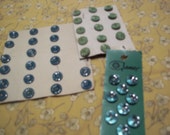
Rita had almost finished making her new dress.  She slipped a padded hanger into the neatly gathered shoulders and hooked it over the door frame. The hem needed a little extra work, she would have to unpick that section at the back and re-do it.  And then there was the button trim to do.  The photograph on the pattern cover showed four pearlised buttons making a short line down from the neck.  The model demurely fingered the top one while staring out to a distant horizon.  Rita admired this look and hoped to recreate it at some point at the party that evening.  She decided to pop down to Woolworth’s immediately and immerse herself in haberdashery.

She selected a card of four green iridescent buttons, which would contrast wonderfully with the pale yellow of the fabric. She went back home and tackled the hem, chanting “four green buttons” to the tune of Four Green Bottles.  Her haste got her into a terrible tangle.  She ended up having to unpick much more than she had intended.  Time stole her finishing touches and by the time she was ready to add her buttons, Peter was waiting for her in the front room. She pulled on the unembellished dress and scraped her hair into a pony tail, held in place by a band of fabric daisies.


Rita’s dress was envied at that party.  She took three orders for exact copies and made enough profit to buy herself a train ticket to London.  That card of four green buttons was never used yet never discarded, for ever to remain in her tin of bits and pieces.


Sarah Miller Walters' books can be purchased as Amazon Kindle downloads for 77p.

Monday, 14 April 2014

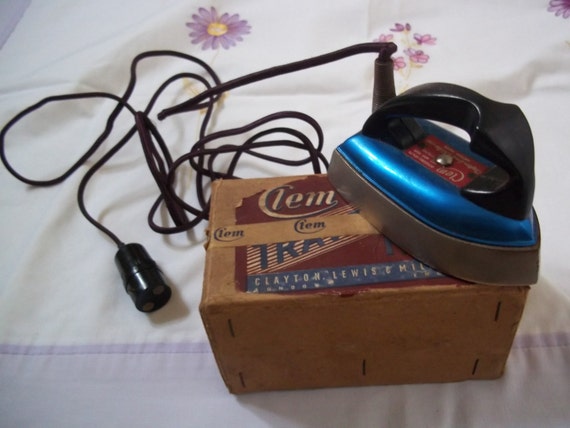
Clem Travel Iron


It was Nora’s birthday.  She had tried not to be too expectant, but Harold always bought her a little surprise.  He was in good spirits lately too, as he had finally got that promotion at the office.  They had more money coming in than they had ever had before – things were looking up.  Nora battled with a wish for a delightful little package to open.  A new chain necklace to replace the one that she had snapped, perhaps.  Or a hairdryer would be nice.


She went downstairs to fetch the morning tea.  When she returned with the tray, there was a neat, square package resting on her pillow, along with her card.  She opened the card first and leaned over to kiss Harold on the cheek.

“I wonder what this could be?”  She handled the package carefully and could glean no clues as to what was beneath the paper.  It was quite thrilling.  She peeled off the wrapping and the inner box was revealed.  She read out the writing on the label.

“Clem Travel Iron.”

“It plugs into the light socket.” Harold imparted this fact proudly.

Nora wondered if it was a trick and pulled the lid off the box.  But there it was, a small but heavy iron with an electric cord and stand.  She stared at it, wondering what to say. She could accept it gracefully and risk repeat presents of the household variety.  Or she could wail out the displeasure which bubbled in the back of her throat.  Then a thought occurred to her.

“But Harold! We always go camping for our holidays.  In a tent!”

“Aha! Not any more, my treasure!  Your holiday this year will be in a hotel by the sea.  A week in Morcambe awaits my love!”

So it was a red herring all along.  One surprise leading to another, much better one. Nora flung her arms around her husband and whispered her thank yous.


“It’s a smart hotel, Nora, so I will need my trousers to be ironed every day.  This will make it delightfully easy for you, my dear.”

Clem Travel Iron for sale in the Etsy shop, SewsAttic


The Diary of a Kind Hearted Man Killer is now available as an Amazon Kindle book.

Friday, 4 April 2014

Official Guide to the Yorkshire Dales


Everyone said that Uncle Arthur was a funny old sod.  He was a fixture of family gatherings, where everyone humoured his often bizarre proclamations.  One of his regular pronouncements was on the folly of ever leaving Lancashire.  He was born in Blackburn, raised in Burnley, holidayed in Blackpool and had retired to Bury – to be near his sister.  He had not once crossed the Lancashire boundary and he had never wanted to.  Why would he want to leave?  Lancashire contained everything a man needed.  Except a wife, it seemed.  He had never married.

Arthur lived in a sheltered bungalow full of books about gardening and wild animals.  He was fond of describing the habits of badgers to anyone who might listen.  When it was time to provide Uncle Arthur with more help, it was his niece that arranged the place in a care home.  She packed away his belongings and arranged the disposal of his furniture.  She boxed up those books that he had chosen not to take with him to the home and took them to a charity shop.  Among the books about wetland birds she found an oddity.  This was a Guide to the Yorkshire Dales.  The niece smiled at the rogue publication, then put it to one side to show her mother and her daughters later. They would laugh at the foreign interloper.

The Guide was still in the niece’s bag when she went to visit Uncle Arthur later that week.  She pulled the book out and asked him about it.
“What’s a staunch Lancastrian like you doing with a book about Yorkshire? You a fifth columnist?” she waved it humorously under his nose. 

He didn’t join in with the jollity.  “Oh, that. It was a lady friend that I found in the ‘60s. She used to come over on the train and visit me in Burnley every other Saturday.  But she couldn’t leave her home in Skipton.  She had ties, you see.  Her mother.   She wanted me to go and live over there and she gave me the book to try and tempt me, like. Looking back I could have done it easily but I was too stubborn wasn’t I?  Too set in my ways, damn fool that I am.  Spent the last 50 years wondering what happened to her.” 
https://www.etsy.com/uk/listing/177989837/official-guide-to-the-yorkshire-dales?ref=shop_home_active_16

See the Etsy shop BradshawsEmporium to see this item and other similar travel ephemera.

Search Amazon for Sarah Miller Walters for more writing.

Friday, 21 March 2014

Dramatic Jewels


Julie found the idea of her daughter at drama school upsetting.  But she was determined not to intervene in Laura’s life.  Julie prayed for Laura to come to her senses and choose something practical to study instead.  Science, Accountancy, Teaching. They led to secure work and a certain future.  But drama? She visualised years of struggle and casting couches.  A lifetime of waitressing, hoping for the break that never came.  Once, Julie vented her frustration to a friend, a relatively recent friend who didn’t know her past.
“But she might be the next Kiera.” The friend had said.  “She’s beautiful.  You’ve got to let her try.”
“You watch too many talent shows on the telly.” Julie had retorted. “She’s just another in a long line of people waiting for fame to drop into their lap.”
“Let her have her dreams.  It doesn’t hurt.”
They bickered on.  But Julie knew that she had to let Laura choose her own way, and then be there for her when it all went wrong. 

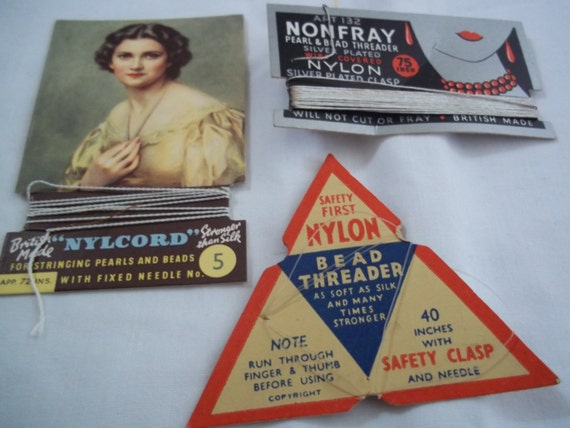
The week of the audition for drama school came.  Laura barely left her bedroom.  Julie could hear scenes from Arthur Miller drift through the partition wall, and a periodic thump as the dead faint was rehearsed. She put the ladders up into the loft.  There, she retrieved a mildewed basket and took it down to the kitchen table. There was an old tobacco tin filled with glass and pearlescent beads.  Then, contained within an old Park Drive packet, she found some nylon cord wrapped around a card.   She began to methodically thread one onto the other.

When tea time arrived, Laura came out in search of food.  Julie beckoned her over.
“I wish my Mum was here to advise you.  She could have given you so much guidance.  She could have told you all about her days in rep theatre.”
“And that advert she did.” Laura joined in, smiling.  “Pity the advert wasn’t shown as often as she told us about it.”
“But these were her beads.  She liked an unusual necklace and loved to pull them all to bits and remake them.”  Julie held her work in her cupped hands, and then placed it into Laura’s. “Wear them for me?  Then I know that she’s with you.  Something might rub off them.”


Laura accepted the beads as if she were being handed her first BAFTA statuette.

http://www.etsy.com/uk/listing/180185089/vintage-bead-threading-collection?ref=shop_home_active_6

Vintage bead threading collection available in the Etsy shop, SewsAttic.

For more short stories from Sarah Miller Walters search for 'Athene and Other Stories' on Amazon Kindle.

Friday, 7 March 2014

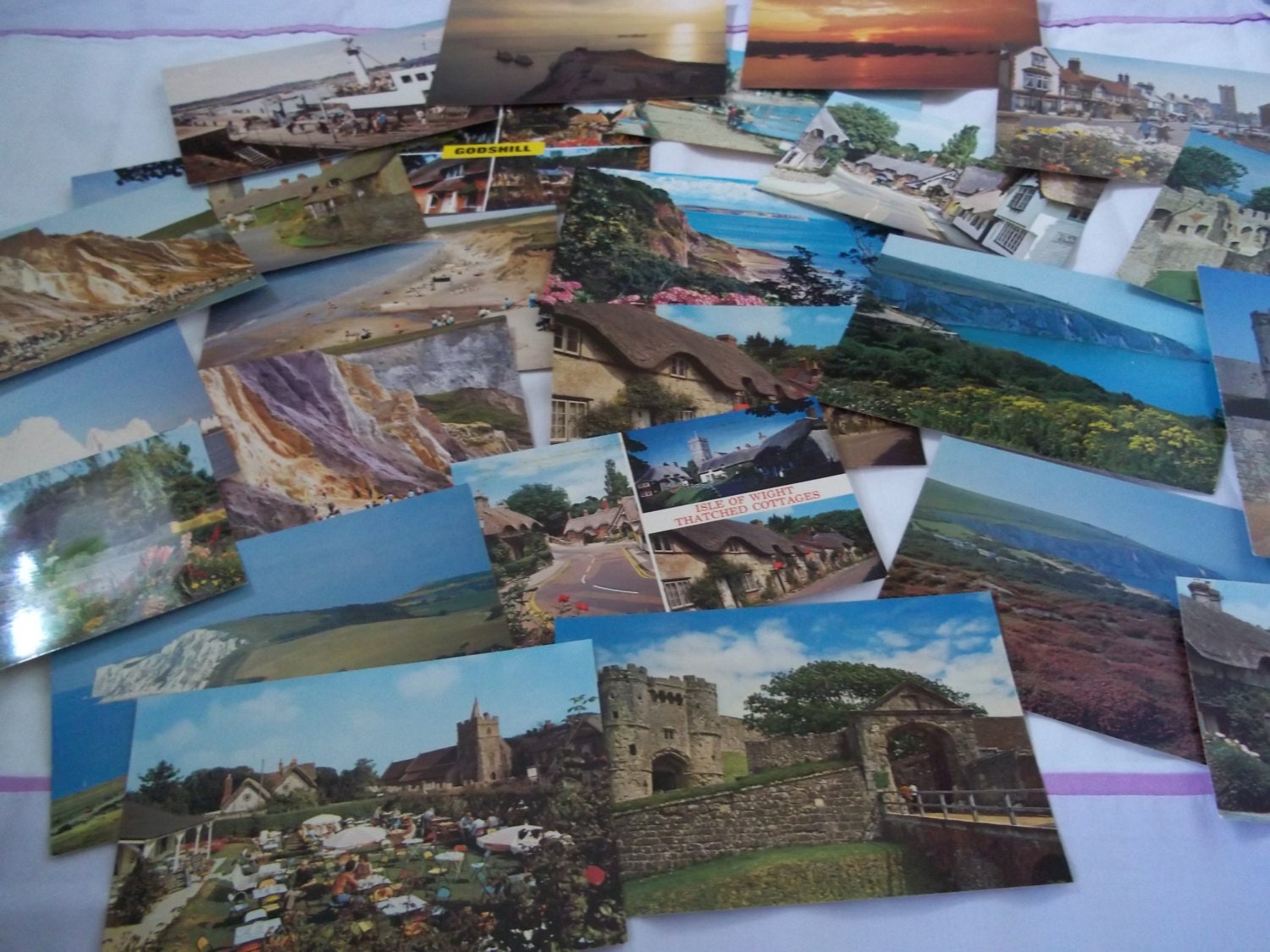
Set of 24 Postcards – Isle of Wight


 Carol knew that this would probably be their last family holiday.  The twins were going to be 16 later in the year. They kicked around with hands in pockets, refusing every suggestion that their parents made.  Incessant bickering between all four of the family members pockmarked every day of the fortnight.

She bought a postcard every day, sometimes two.  She didn’t write on them or post them. She tucked them away in the back pocket of her handbag, along with her emergency tenner and her pills.  No-one else in the family noticed her little collection, but then, she doubted if they would notice even if she carried half of the National Gallery around with her.  That was her job, packhorse.

By the time that they boarded the ferry to leave the Isle, Carol had collected 24 postcards in all.  They remained in the zippered back pocket of her handbag throughout the journey back to Surrey.  The following Monday, she saw her husband off to work, and the twins off for their final year at school. She then took a train to Waterloo and found a place under the clock.  She stared at the continually disgorging hoards as they made their way across the concourse, keeping her eye out for that familiar hat. She saw it, then the smile that she loved beaming out from under the shadow of the brim.  After a brief squeeze of hands, they went to their usual café, where she took the postcards from her handbag and placed them in his palms.
“What’s this?” he laughed as he went through each card in turn.  “They’re all blank!”
“Well, I couldn’t send them to you!  So I waited until I could put them in your hand and tell you what I wanted them to say.”
He laid them out on the table and began to count.

“There are 24” she cut in “One for each hour of every day that I missed you.  That’s all I wanted to say.”

For sale in BradshawsEmporium http://www.etsy.com/uk/listing/180174282/collection-of-24-vintage-postcards-isle?ref=shop_home_active_2


Find more of Sarah's short stories in 'Athene and Other Stories' for sale as an Amazon Kindle download -
http://www.amazon.co.uk/Athene-Other-Stories-Miller-Walters-ebook/dp/B00HF8Z3AC/ref=la_B00DZPX09U_1_3/279-8122884-2884619?s=books&ie=UTF8&qid=1394192569&sr=1-3

Monday, 24 February 2014

The Measure of Her

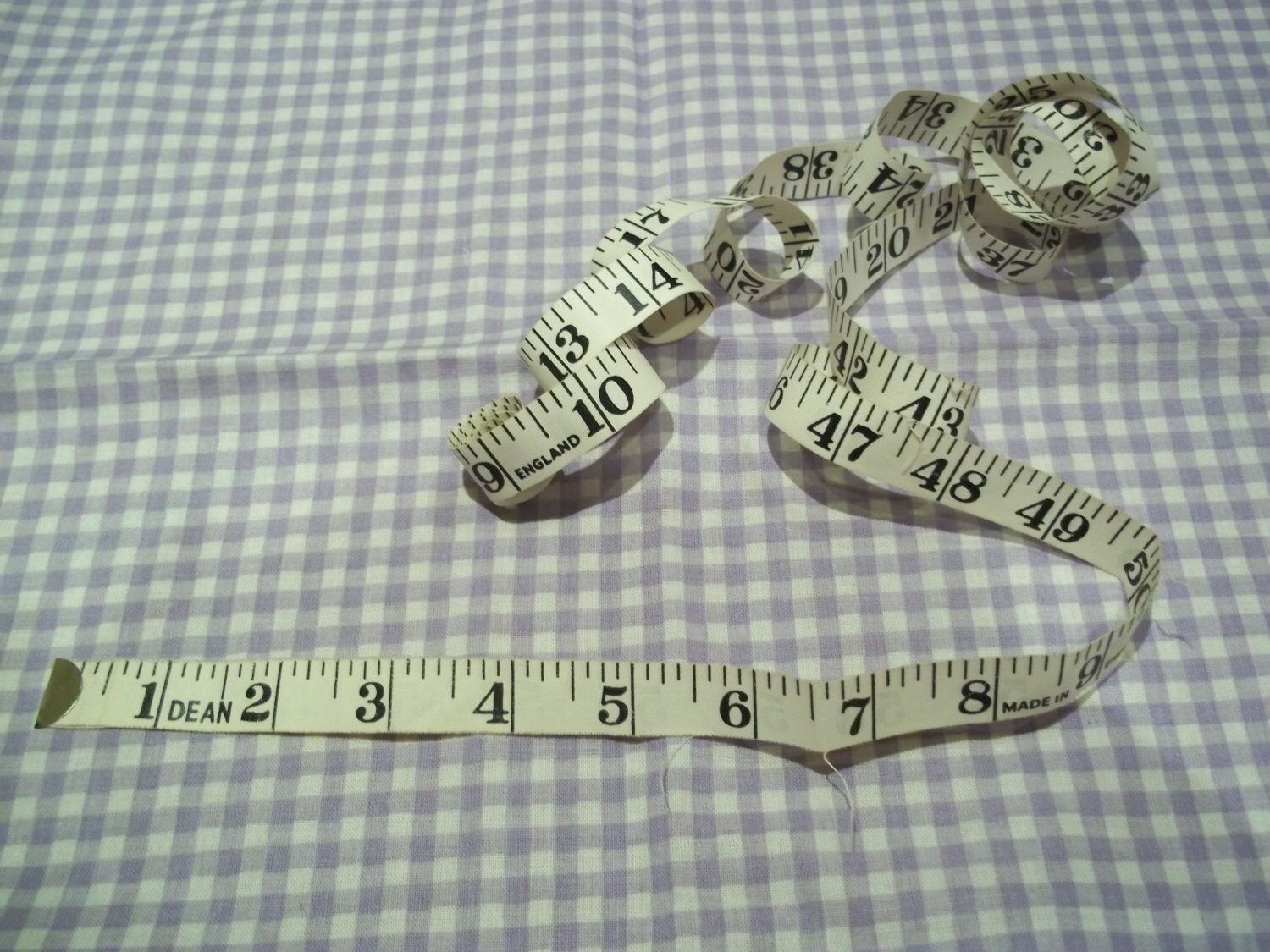
Angela pulled her mother’s shopping list from the pocket in her home- made summer dress.  A reel of Sylko in Buckingham Lilac was at the top of the list. The stitching was coming loose at the hem of her dress and this would be used to make the required repairs. Next was a reel of Peacock Blue for mending the tear in her gymslip, then a box of Dorcas pins to replace all those that invariably disappeared.  Finally, a new tape measure was required.  One with inches on both sides.  This last instruction was underlined twice.
“All of our tape measures are metric on one side and imperial on the other” the tiny haberdashery junior whispered to her. “It’s how they’re made now.”
“Haven’t you got any imperial only ones left over somewhere in the back?” Angela almost pleaded.
“I haven’t seen any at all recently.”
An older assistant appeared from behind a curtain and began a brisk tidy of the fabrics.  Her glasses, which she wore on a chain around her neck, bounced on her matronly bosom as she worked.
“Oh dear.  What am I going to do?  Do you know of anywhere else I might try?”
“What’s the problem, dear?” The matron swept up to Angela.
“My Mum needs a replacement tape measure – she snapped her old one – and she really wants one with inches on both sides.  She’ll not be happy at all if I take one with centimetres on.”
“I know just how she feels.  I can’t deal with all this metrication either.  But can’t she just use one side of the tape?”
“She says it bothers her to always have to be looking which side to use.”
“Why don’t you try Hatchett’s round the back of the cathedral?  Or look in the flea market?”

Angela left the department store, thoughts of the incident on Sunday driving her on. The screaming from the bedroom that had taken her upstairs to find her mother frenziedly chopping at her new tape measure.

“I’m not having that!” she had squealed at Angela “I measured my waist and it said 88! Frightened me out of my wits, damn centimetres. I’m not having THAT!”


http://www.etsy.com/shop/SewsAttic

Thursday, 13 February 2014

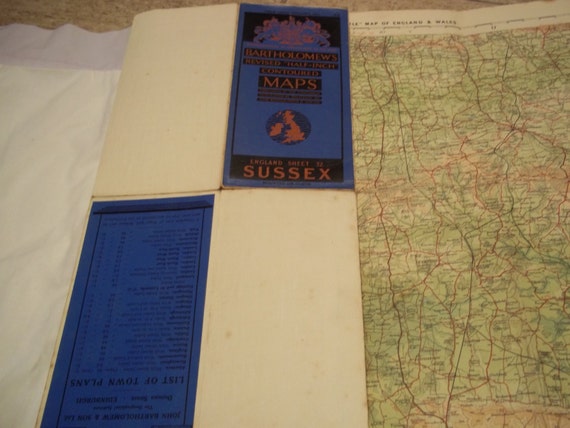
Bartholomew Sheet 32

When Stephen bought the map, he asked the shop manager if it could be wrapped.  It was an unusual request, half inch maps were rarely bought as gifts.  But the act of purchasing the item had made his customer look rapturous, and it was infectious.  Why not wrap a map?  Happy customers returned for more.

The rectangular brown package, tied up with delicate string, went home with Stephen in the inside pocket of his overcoat.  He felt it against his breast as he hung from a strap on the tube. He held it to his chest as he jogged up the five flights of stairs to the flat.  He swung through the front door and dodged the line of damp nappies and stockings. They were strung across the tiny lobby, absorbing the odour of frying potatoes. Without stopping to remove his coat, Stephen skipped into the tiny kitchen, where his wife stood at the gas stove.  It was taking all of Vera’s attention to stop the potatoes from sticking to the pan.  Her hair hung limply over her shoulders, she yawned and stretched as he approached.

“Good day dear?” It was her automatic greeting. 
“Marvellous!  Fantastic!  Superb!”
Vera put her old cooking spoon into the pan and properly looked at her husband.
“Was it?”
“Here.  Turn the gas off a mo and open your present.”  He produced the package from his coat pocket.
Vera took it from him and carefully sliced through the string with her potato knife.  She gave him the empty wrapping and turned over the map.
“A map of Sussex.  What do I need this for?” she resisted a smile.
He gave her a set of co-ordinates, scribbled in pencil on a torn edge of a newspaper.  With her rambling experience, she found the spot within seconds.
“The Arundel cottage?”
He nodded. “It’s ours!  Our new home in the country.  Hot and cold running and hikes every weekend without the need for transport.”


Vera clutched the map to her apron, while Stephen searched the scullery for that bottle of stout.


Monday, 1 July 2013

The Mothballed Marriage

Rose had managed to secure the shop on cheap terms.  It had been empty for so long now, that a lot of people could not remember it ever being in use.  Originally, it had been the local Co-op – that was obvious from the aquamarine tiles around the plate glass window.  Then it had been a car spares shop and finally a newsagent.  Then, one Friday afternoon, the window had been whitewashed and filled with newspaper.  A piece of plywood had been nailed over the front door.  Ownership had changed hands several times since, but none of them had used the shop; only the flat above.  The newspaper in the window had turned yellow, and the print sun-bleached into oblivion.  The current landlord offered Rose use of the shop when she had just missed out on another of his properties.  As her business already thrived online the position of the premises was not as important as the large storeroom at the back. 

Rose first arrived on a Sunday morning, armed with voluminous overalls and a comprehensive selection of cleaning products.  The utility area seemed the most sensible place to begin renovations. It contained a kitchenette obviously installed during the 1970s, in fact the cupboards were the same type as those that had been in her family home when she was growing up.  She opened the first cupboard, half prepared to be assaulted by a family of something small and horrid.  It was empty, except for a lining of newspaper.  She pulled out the brittle pages and studied them.  It was an excerpt from the local Telegraph, dated June 1974, the weddings page.  A row of happy couples smiled up at her.  Rose’s own responsive grin faded however, as she saw the second couple’s photograph.    

“Dad?”


She read the entry again, more slowly.  Her father, marrying a woman who was not her mother.  Her father, married before Mum. He had never told her.  Was it deliberate deceit or had there just been no reason to mention it?  Her name was Helen. Where was Helen now?  Rose folded the paper carefully and placed it in her rucksack.  This afternoon’s family Sunday dinner was going to be the most interesting yet. 

Thursday, 4 April 2013

At The Town Hall Fountain


I remember sitting on the low wall that hemmed in the old fountain.  I call it a fountain, but the water hadn’t moved for ages.  It was more of a large stagnant puddle with rusted up workings in the middle.  An empty Park Drive fag packet bobbed about the surface and I was watching it.  There was nothing else to do.

My Mum was in the Town Hall, queueing to pay the rent on our council flat.  It was a warm day anyway, but inside the badly designed extension it was sweltering.  People in the shuffling lines fanned themselves with their rent books and final reminders.  I was at that age where patience has yet to be appreciated and this was an age of fewer fears so I had gone outside to wait.  The sun glinted off the stagnant water making it look a vaguely pleasurable place to be.  I watched the bobbing fag packet and tried to resist putting my hand in the water.

The sound of shouting made me look.  A man and a woman were striding down the walkway, arguing.  They didn’t belong round here.  Local people did not argue so publicly, so passionately.  People that I knew simply grumbled and exchanged looks from under heavy brows.  But these two – they yelled, they waved arms, jabbed fingers.  She threw a carrier bag of something at him. This was the best entertainment ever.  Their accents reminded me of something you’d hear on the BBC telly.  As the man drew closer I realised why I thought this.  He was the man off the telly.  The man off Play School, the programme I watched when I got in from school.  He was oblivious to me as he passed close by, still yelling.  Mum came down the steps, putting her rent book in her handbag then holding out her hand for me to take. 
“Ooh, that’s him!”  She said “I wonder what he’s doing round here?”
“Having an argument” I observed.
“These telly types…” she tutted.
We walked on, passing the theatre where his face beamed out from a poster.  That explained it.    

Saturday, 16 February 2013

An Accumulation


Harry Price had started in the Bookmaking trade in the yard at the back of the Crown.  He had done so when his father had decreed that he was ready to take over.  The punters trusted him, and he had always inspired loyal service from his runners.  The coppers left him alone and business was good.

When the 1960s came, new laws said that Harry need no longer hide away behind a back street pub.  And so, along with so many of his fellow tradesmen, he reluctantly joined the High Street.  He took on a small shop at the shabby end.  Formerly a fishmongers, he could never quite get rid of the smell – but the tiling was easy to clean and the spit and fag ends could be removed in one sweep.  Indoor life without windows didn’t suit so well though, and Harry nurtured a resentment.  The rent, the electric and the sweeping brushes were all a source of irritation.

One particular Saturday Harry’s habitual scowl became more pronounced. A big chain had opened up a bookies a bit further down the street, and to top it, Billy Jackson’s accumulator was close to coming up.  Just one more race to go – if the favourite came in Harry was done for.  Everything he owned would belong to Billy.  As the commentary started, the shop fell into quiet.  The punters all watched Harry either with sympathy or delighted interest.  The favourite led the field.  Harry wondered if it was time to retire anyway.  The final furlong came.  The favourite won. 

Harry shooed them all out of the shop and went to lock the door.  Some protested – what about Billy’s money when he came for it?  Harry told them that Billy knew where he lived, and he set off up the High Street.  He walked into the new bookies and flourished a neatly folded slip under the screen.  He’d agreed with Billy’s predictions and had placed the same bet – with triple the stake - with the new shop.  He smiled to himself as one of his old regulars pretended that he wasn’t there. 

Thursday, 27 December 2012

The Rare Medium


He’d been gone a whole month now and still it was no better.  The very idea of never seeing Garry on screen again made June feel sick. No-one was able to console her.  The only time that she felt happy was when she climbed into her unchanged bed and began to drift off to sleep.  Then she could settle into her regular dreams, the ones where Garry was alive and well and visiting Rotherham on a promotional tour.  He would visit the cinema where she worked, clap eyes on her as she sold him an ice cream…and never take his eyes off her again.  He would lead her into the projection room and…and…well never mind, she’d usually nodded off by this stage.

Alexandra Haseldown-Smith.  The stars’ chosen Medium.

The advertisement was bold, confident, assertive.  June decided that there must be some substance to her claim or she wouldn’t place it in a national newspaper.

In regular contact with stars of stage and screen whom have passed over.  Seances held regularly in theatres and studios at the request of several well-known directors and actors.

If anyone could help her to make contact with Garry, it would be Alexandra Haseldown-Smith.  June hadn’t got much money, only what she’d saved for her bottom drawer.  But it looked like she’d never need that.  No other man could ever live up to Garry.  Especially in Rotherham.  Sod marriage, now that Garry hadn’t much else to do, he might talk to her, advise her in some way.  Tell her he would wait until she joined him.   June went out and bought the most spiritual looking notepaper that she could find (blue with faint lines).  She cleared the pots and pans off the kitchen table and sat down to write.

“Dear Miss Haseldown-Smith.  I need you to help me make contact with an actor that passed over recently.  I believe that he might have something to tell me.  Please can you help me?  I have a few pounds and can come to London if you need me to.  My future and my happiness depend on it.  I enclose a stamped addressed envelope.”

Monday, 26 November 2012

Cat in a Bag


As she tells me that she’s in trouble, she looks at me in the same way that a kitten might. She wants me to pick her up and pet her. Tell her that I’m going to keep her. But every bit of me wants to bundle her up in a sack and drop her in the deepest part of the Thames.

She’s been trailing me ever since I got back on my 48 hour pass from the base. I thought she was just hungry for some more of what she had last time, but there was never going to be any of that. Poor, innocent little kitten, doesn’t she know there’s a war on? Everything’s temporary these days. But now she’s telling me that there’s something lingering after that regrettable whiskey fumble. She’s telling me about reputations. Apparently I should be making hers my business.

But I’ve got another idea. Didn’t I once hear about a quack fellow in
Soho who took care of these problems? It’s just persuading her. She’ll be hard work. I can see the reflection of the wedding flowers in her tiresome tears.

I regret my curiosity. I only wanted to be sure that all that kind of thing wasn’t for me. A test.  Now I know for sure that girls are just not my thing. The sooner I’m rid of this one… Then I can get to the boys on the base and the frisson of the smell of their sweat in the huts. There’s going to be some nice new raw recruits joining us tomorrow.

She’s stopped her jabbering now. She’s waiting for me to speak. I take out my wallet and offer her crumpled notes. She throws them back at me, and, oh Lord here we go, she begins to wail. The air raid siren starts up in sympathy. I turn her around and push her towards the tube station steps. The steep, steep staircase delves down into the ground before us. The place begins to get crowded. A stumble into the depths would be easy to engineer in the dark and the rush...all I have to do is prise those little claws out of my jacket sleeve.

Saturday, 10 November 2012

Some People Use War as an Excuse for Everything


Mrs Bagshaw lived for disapproval.  Not that she wanted anyone to disapprove of her.  Her behaviour was of course exemplary.  Otherwise she wouldn’t be qualified to offer out her opinions on the way that other people ran their lives.  Everyone else was doing it wrong.  But Mrs Bagshaw had a husband, two children, a full washing line and front doorstep that gleamed, even on a foggy day.  Of course she was doing everything right.  But her across the road at number 12, well!  She was a different kettle of fish altogether.

It was in the war when her at number 12 went wrong.  Women of her sort used the war as an excuse for all sorts of ridiculous behaviour.  First of all she married that pilot.  She went silly over the uniform.  And if anybody was going to get themselves killed it was a pilot.  The marriage didn’t last a year before he went down in the North Sea.  And what had she done in the meantime?  Got herself pregnant.  Talk about setting yourself up for sorrow.  So, there she was – no husband, a kiddy that won’t stop crying because it’s got an unfit mother and no food in the cupboard.  No time to grow anything she said – even though she’d a lovely patch of soil round the back.  So, she fetched round the ARP warden to see about growing some potatoes – and ends up growing much more into the bargain.  Another baby no less.  The ARP Warden went running back to his wife, saying that there was no proof that the blighter was his.

But the real disapproval started at the end of the war, when young Peter Bagshaw turned 19.  Just the day after his birthday, he was caught sneaking out of number 12 at 1 o’clock in the morning.  Peter got a red ear but he never lost his grin.  Local opinion was divided on whether number 12 had done it out of spite to Mrs Bagshaw, or because she just genuinely couldn’t resist a strapping young lad.  Either way, when there’s a war on, you take your pleasure where you find it.

*Title inspired by a line from Human Voices by Penelope Fitzgerald

Monday, 22 October 2012

Empathy on the Bus


The child continued to scream even after the mother had paid the fare and settled down gratefully into a seat.  The child remained in its pushchair, but the brake had to be applied, so rocking was not possible.  A gentle push to and fro is what usually sends them off.  Instead, the mother hoped that the burr of the engine would soothe her child to sleep.  One or two older people tutted as the precise pitch of the screaming was delivered straight into their eardrums by their hearing aids.  One woman ostentatiously turned hers off.  Another offered a solution under her breath – “take the damn thing out of its pram.”

But the mother was determined to remain firm.  Sleep time means no cuddles, no matter how loud you scream.  I’m all out of cuddles just now.  She leaned forward and in a compromise to appease other passengers, took her child’s fist in her hand and began to stroke it with her worn out, steriliser-raw thumb.

A woman in the adjacent seat looked over at the mother; too distracted from her book to read anymore.  She wasn’t annoyed, like those whose child rearing days were long past.  She simply felt relief that the child wasn’t hers.  That her children were safely in school and that she would be able to walk away from that heartbreaking sound.  Those days were not so long ago, when she felt just like this mother looked.  Exhausted not even strong enough a word.  She remembered the nights sat on the landing, sobbing because her child wouldn’t sleep and her office desk awaited her in 4 hours time.  That determination that normal life must continue, even in the face of a tyrant who communicates only through nuances of top volume.  She wanted to tell her that it would end one day.  Sooner than she knew.  But the bus stop loomed. And the child began to mew dozily.  Instead, she gave a conspiratorial smile and walked on.

Friday, 5 October 2012

In a Waiting Room, 8th October 1952


It’s busy in here.  This fog’s a proper pea-souper.  It’s coming under the doors and down the chimney.  Usually with a fog like this I struggle to breathe but I don’t feel so bad today.  I haven’t coughed since the train either.  The train.  I was on the train.  So what am I doing in a waiting room again?  Where has George gone, I wonder.  Oh, I feel a bit sleepy.

Here’s some more people.  I’d better shuffle up and make room.  At least these seats are comfortable.  Must be first class.  Hang on, here’s some people with uniforms on.  He’s a driver, surely.  That’s not done, letting engine staff into a first class waiting room.  I’ll have to write a letter to the Stationmaster when I get home.  If I ever get home.  What on earth is going on?  Yet more people?  This really is a disgrace, and no-one here to give us any information.

Ah! Now here’s someone who looks like they’re going to take charge of the situation.  Those buttons on his waistcoat are awfully shiny.  That’s very reassuring.
‘Ladies and gentlemen, may I have your attention?  We are so sorry to keep you waiting, we weren’t expecting so many of you at once.  Please be assured that we will deal with each of you in order of your time of arrival.’
How does he know which one of us was here first?  Extraordinary.
‘Mrs Barnes?  This way please.’
Mrs Barnes and the man with shiny buttons disappeared into the fog.

Sunday, 30 September 2012

One for Sorrow, Two for Joy


They live near the hospital, the two of them.  They will continue to live there, together, until the day that one of them doesn’t return.  When she’s not hungry, she prefers to stay with her things.  She likes to see them glitter in the sunshine, to know that they are hers.  But he likes to get out and about, he’s the social one.  He pops up here and there, he likes to watch people go by, and he rattles out a harsh laugh at their foolish antics.  He doesn’t mind that she doesn’t come out with him much.  Because, for some reason, those people are even more entertaining when he’s on his own.  When she’s there, they might look and smile, but then they move on.  But when he’s alone, they stare at him and take notice.  Sometimes they talk to him, sometimes they wave their hands up to their heads.  He likes to think that it’s because they admire him so.  That he’s at his sleeky and glossy best.  He holds his head up and laughs at them.  But he also knows that when he’s alone, he seems to have some mysterious hold on their nerves.  Are they worshipping him?  It’s possible.  He is the most superb of beings.  When he returns to her, he tells her about them.  Then they laugh together, share the joke and a worm.  He doesn’t know about sorrow, he doesn’t know about much at all.  That’s what makes him so joyous.

Tuesday, 18 September 2012

Just Getting it off My Chest


It’s harvest time.  We reap as we sow, so we are told.  But it’s not quite true is it? Sometimes we reap what others have sown, and the taste is bitter.  Sometimes we reap those things that have grown naturally, without our input.  Biology asserts itself.

Someone set a seedling in my neighbourhood.  We didn’t like it, it was ugly, but he delighted in it like a child.  He tended the seed and it grew a little.  Until now.  Now, its loathsome tentacles have reached out and grabbed us by the throat.  Its rude demeanour offends those who see it and they would cut it down along with those of us held in its grip.  They think that we are part of it.  But we are not, we suffer more than the offended as the grip increases.  There is no life in the soil around it.  It must go.

If only we knew how the plant can die.  It appears so robust.   Will be ever know the end? Will this become an anecdote or the cul de sac?  The grip must loosen.  Biology will eventually re-assert and people will turn away from the sight of a near dead parasite.  But we must move away in case of those things that lie dormant , waiting to spring back to life.

Monday, 17 September 2012

Memories of Jamie


Fresh from academia I began work in a primary school.  A new bite at reality.  The school served a big inter-war estate, built with optimism that couldn’t be sustained 60 years on.  Every morning the playground was cleared of drug paraphernalia.  The pupils looked on with eyes that had seen more in their nine years than I had seen in my 22.

Jamie had seen trouble.  But still I did daily battle with his exuberance in order to try and teach him literacy. There were obstacles.  He liked the band Pulp, and was prone to sudden outbursts of their songs.
‘Ok, then Jamie.  Let’s read Mog.  Mog lives with Debbie.’
‘YER NAME IS DEBORAH, DEBOARAH, IT NEVER SUITED YER!’
One problem with this was that I kind of wanted to join in.  Later on he would catch me humming the tune of his latest song-burst, and laugh happily.  I could see his point.  My own infantile sense of humour matched Jamie’s.  How many of my guffaws were muffled in the stock cupboard, under cover of looking for paper.

One evening after work, I stood in the car park, head in my hands.  Jamie ambled up, flouting the rules.
‘What’s up, Miss?’
‘I think I’ve locked my keys in the car.’
‘Do you want me to break into it for you?  I know how to do it.’  He rolled up his sleeves.
I had no doubt that he could do it.  But a renewed search found the keys in the lining of my coat. He walked on, disappointed at not being my rescuer.  I think he liked me and we made progress that year.
‘Shall we do some work, Jamie?’
‘Alreet.  Being as it’s you, miss.’

All of this has come back to me after seeing his name in the paper.  I wondered if I would see his name in the court roundup – the city’s most charming TWOC-er.  So I’m pleased that it’s not in that section, but the entertainment pages.  His comedy night at The Troc is so successful that it’s going to two nights a week.  I might go along and watch.  This time I can laugh out loud without setting a bad example.

Saturday, 8 September 2012

In a Layby Near Stowmarket


The sign on the A14 indicated that there were services ahead.  Martha pulled off the main road; thinking of shops, conveniences and hot food.  What she found was merely a petrol station with a patch of hard-standing.  There had been a café once, but it looked like it had served its last bacon butty before the turn of the century.  The windows were thick with the dust kicked up by a constant convoy of container lorries.  Martha felt much the same herself, like she could scrape the dirt of her journey off her body with a sharp edged implement.  She must stop though, at least wipe her hands and find a cool drink.  She turned off the engine and looked around.  The midday sun glinted off the petrol price list .  Two van drivers in shorts took long swigs from cans and exchanged comments about the roadworks near Cambridge.

The van drivers glanced over at Martha as she got out of the car.  It was a car that attracted people’s attention and they were always curious to see the driver.  It could work against her, people might remember seeing the sleek white coupe gliding along the fast lane.  But, then again, the cameras.  She’d be picked up wherever she went, no matter what the car.  At least this one could go fast, nip between lanes of traffic. 

The pre-occupied woman in the petrol station shop served her with little care and pointed out the toilets as if she had done so a thousand times already that day.  Martha returned to her car, wiping her hands thoroughly with a wipe, and then rubbing in anti-bacterial lotion.  She worked it in between her fingers and up her wrists.  She turned on the engine and left. No need for petrol.  Soon she would be in Harwich with its big anonymous car park and boats to the continent.